Two AI products, built solo,beaten to market twice
01 — Summary
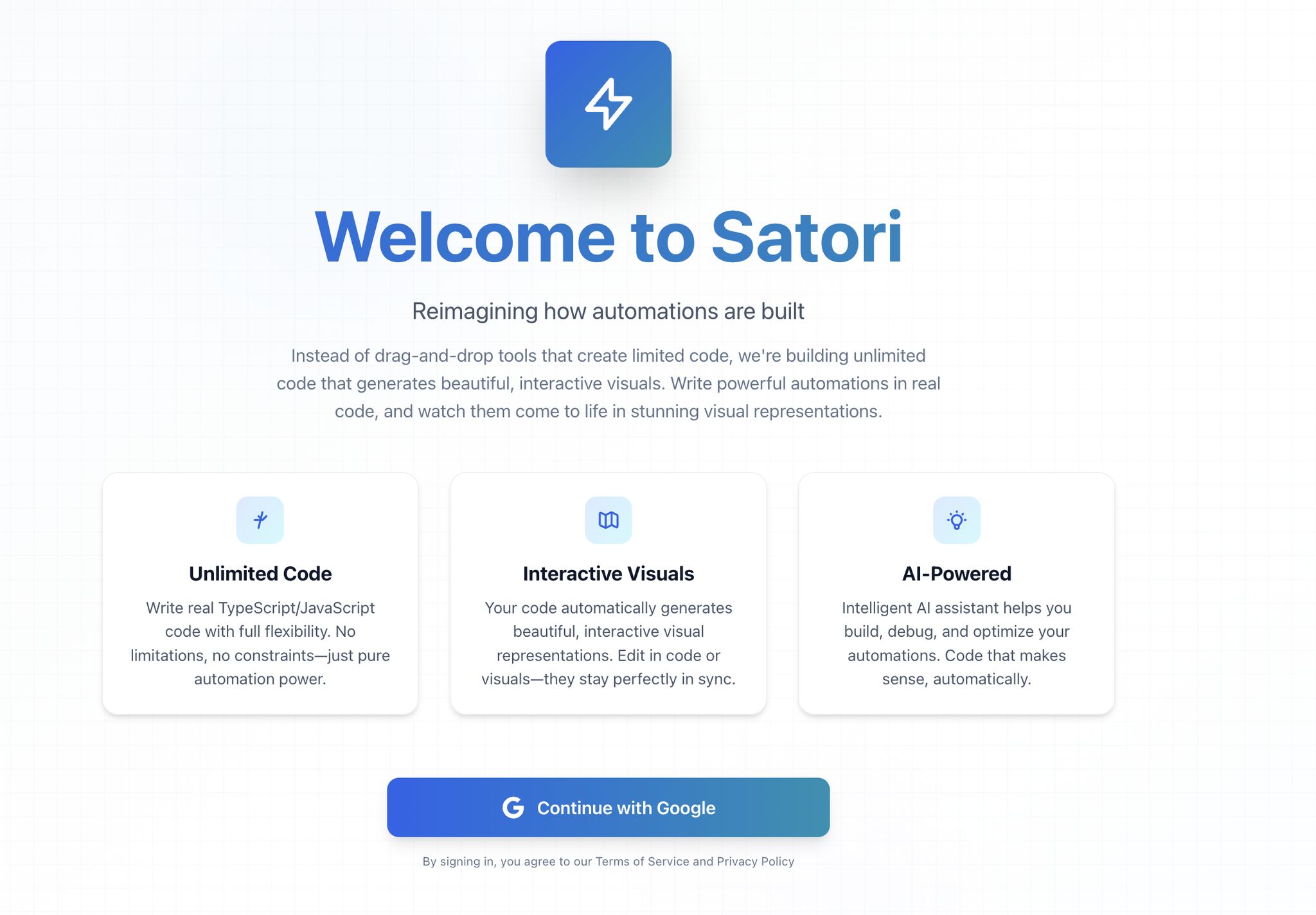
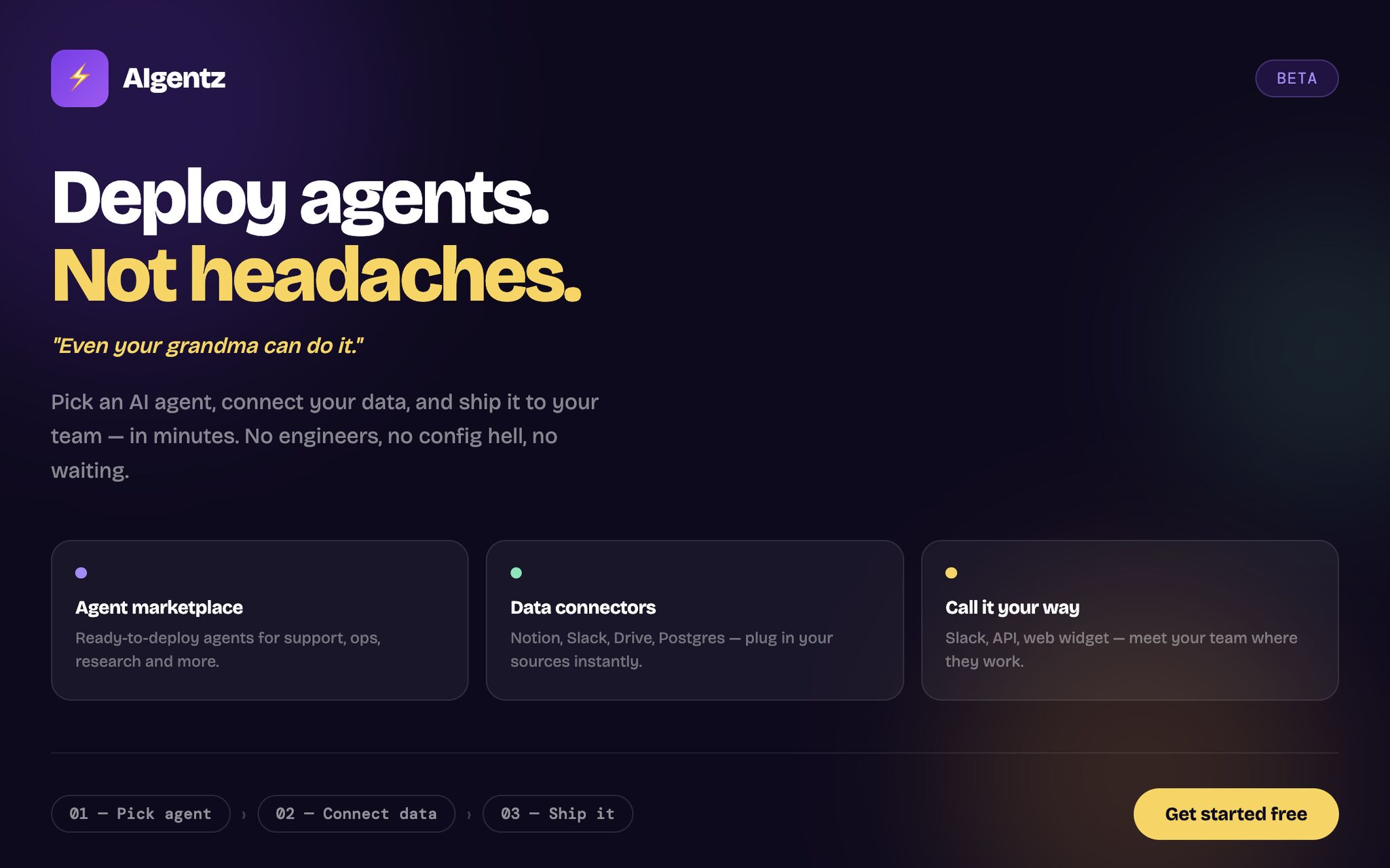
Satori, a text-to-automation platform. AIgentz, for deploying AI agents. Both reached working MVPs with real testers. Then Cursor and OpenAI shipped theirs.
My role — Product strategy, design, engineering, deployment and user testing.
working MVPs with real testers
team and budget behind them
beaten to market by Cursor and OpenAI
02 — The problem
AI was moving faster than anything I could read about it. I decided the only way to actually understand what was possible was to build things that did not exist yet, on my own time, with no team and no budget.
03 — What I did
- Built Satori first: a text-to-automation platform. Several months of development to a working MVP, with people testing it and giving encouraging feedback.
- Cursor then released functionality that looked remarkably similar, and did it very well. I stopped rather than competing.
- Started AIgentz: a platform for deploying AI agents across organizations and connecting them to the right data sources.
- A few months later OpenAI released their own agent platform and tooling. Same feeling, second time.
- Along the way: Cursor, GitHub, Vercel, databases, authentication, Google integrations, APIs, and a steadily growing ecosystem of AI tooling.
04 — What changed
- Two products that reached working MVPs with real testers, both still live.
- A concrete answer to the question of whether I can actually build, rather than only manage people who build.
- Direct experience of how quickly the frontier moves, which is now the most useful thing I bring to adoption work.
What I took from it
The biggest takeaway was not about the products. It was that one person with some technical knowledge, curiosity and a willingness to learn can now build things that used to require entire teams. Getting beaten to market twice by companies with thousands of engineers is not the failure in that sentence. It is the evidence for it.